Fast-track LPN training is one of the quickest and most direct ways to begin a nursing career, and this guide will help you decide if it fits your life and goals.
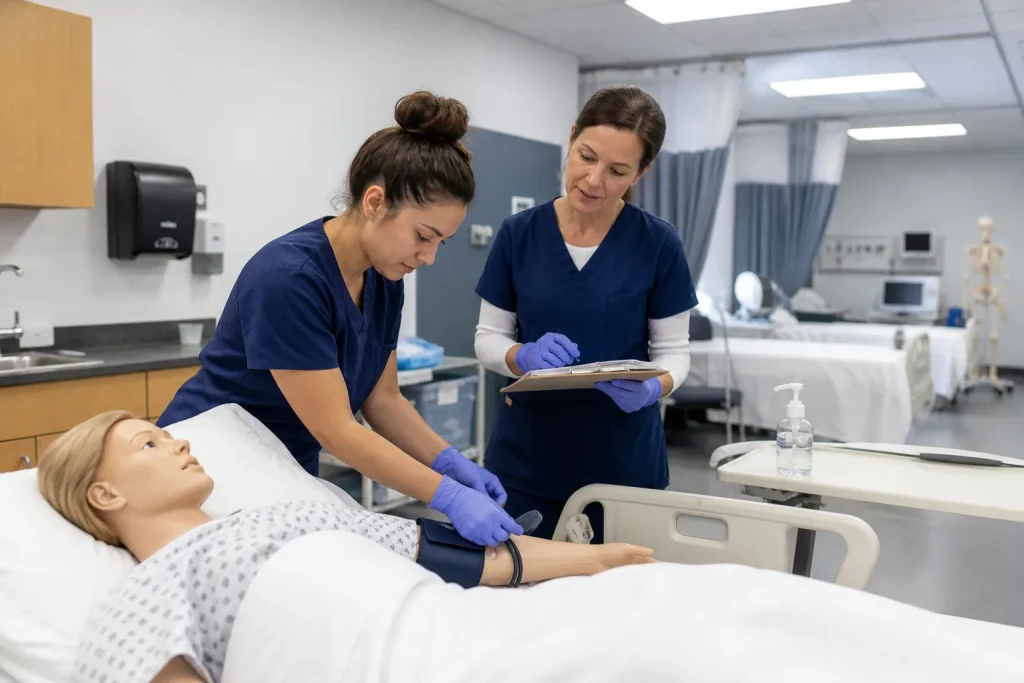
Fast-Track LPN at a Glance
A fast-track Licensed Practical Nurse program compresses state-approved nursing education into an accelerated schedule so students can begin working sooner.
Many programs aim to be completed in about 9–18 months, but exact times vary by school, format, and state board requirements.
Think of a fast-track program like an express train rather than a local stop; the destination is the same but the trip is faster and more focused.
Why Choose a Fast-Track Program
If you want to start earning as a nurse quickly, fast-track programs reduce the wait time between decision and paycheck.
Many students choose fast-track training because it can be more affordable than longer RN routes when measured in total time and living expenses.
A short, intense training period is not for everyone because it demands focus, time management, and resilience.
Timeline and Program Lengths
Programs marketed as fast-track often list durations that depend on whether the school runs year-round, uses condensed semesters, or offers bridge options.
The actual completion window often hinges on state board rules and program format, so check both the school page and your state board of nursing.
A realistic plan includes the program length, study time for the NCLEX-PN exam, and state licensure processing.
| Program Type | Typical Duration | Who It Fits |
|---|---|---|
| Accelerated full-time | 9 to 12 months | Learners who can commit to full-time study and want the fastest route |
| Traditional diploma | 12 to 18 months | Students preferring a paced schedule with more breaks |
| Hybrid | 9 to 18 months | People needing some online coursework but able to do in-person clinicals |
| CNA-to-LPN bridge | 6 to 12 months | Certified CNAs or experienced healthcare workers who qualify for advanced placement |
| Part-time or evening | 18 to 24 months | Those balancing work, family, or other commitments |
Admission Requirements and Prerequisites
Most programs require a high school diploma or GED as the basic entry requirement.
Additional prerequisites typically include immunizations, TB testing, a background check, and current CPR certification.
- Background check and drug screening to meet clinical partner rules.
- Proof of immunizations and TB test to protect patients and meet facility standards.
- CPR certification to ensure basic life support skills before clinicals.
- Some schools ask for entrance testing such as TEAS or placement tests to assess readiness.
How to Choose the Right Program
Choosing the right program is less about the shortest ad and more about quality, state approval, and clinical placement strength.
Interview former students or ask the program for clinical partner lists to get a sense of real-world training.
- Verify state approval with your state board of nursing before you enroll.
- Check NCLEX-PN pass rates for recent cohorts as a quality indicator, but confirm figures on official sources.
- Choose a full-time accelerated format only if you can commit the time and energy required.
- Ask where clinical rotations take place and how the school supports job placement.
Coursework, Clinicals, and What You Will Learn
Fast-track LPN programs still cover core nursing topics such as pharmacology, medical-surgical care, maternal-child nursing, and mental health.
The difference is pacing and intensity rather than content omissions, so expect dense study and repeated hands-on practice.
Hands-on clinical experience in real facilities is a required element and often the most valuable part of training.
| Component | What You Learn | Typical Hours or Notes |
|---|---|---|
| Nursing theory | Foundations, pharmacology, and clinical reasoning | Multiple classroom hours weekly, often condensed |
| Clinical rotations | Direct patient care, documentation, and teamwork | Scheduled at hospitals, nursing homes, and clinics; hours vary by program |
| Simulation labs | Scenario practice for critical skills and emergency response | Often used to bridge gaps when clinical slots are limited |
| Skills labs | Hands-on practice with procedures such as injections and wound care | Repeated practice sessions to build competence |
NCLEX-PN and Licensure Steps
After graduation you must apply for permission to test with your state board of nursing before taking the NCLEX-PN.
Passing the NCLEX-PN is mandatory to receive your LPN license and begin practicing.
- Submit your licensure application to the state board and pay any fees required.
- Pass the NCLEX-PN after preparing with practice exams and review courses if needed.
- Apply for your state license once you receive authorization and verification of your test results.
- Start applying for jobs while licensure paperwork processes so you can begin quickly after approval.
Fastest Pathways and Bridge Options
If you already work as a CNA or in another allied health role, bridge programs often shorten the curriculum by granting advanced placement.
These bridge routes can feel like taking an accelerated ladder instead of climbing every rung from the bottom.
- CNA-to-LPN bridge programs that credit previous experience and training.
- Accelerated full-time tracks that run year-round with minimal breaks.
- Hybrid options that mix online theory with required in-person clinicals for flexibility.
Cost, Financial Aid, and Managing an Intensive Schedule
Accelerated programs can cost less over time because they compress the length of study, but per-term tuition can feel steep.
Community colleges often offer more affordable fast-track LPN options than private schools, though quality and clinical access vary.
Balancing life during a fast-track program is like sprint training; rest, nutrition, and schedules matter more than you think.
- Explore scholarships, grants, and state workforce funding that support short-term vocational training.
- Financial aid options include FAFSA based aid for eligible programs and institution-level scholarships.
- Consider employer tuition assistance if you are already in the healthcare field or can secure a training contract.
Career Pathways After LPN
LPNs commonly start in long-term care, home health, clinics, and physician offices where practical bedside skills are central.
Many LPNs gain experience and then progress to LPN-to-RN pathways to expand their scope and earning potential.
| Job Role | Common Setting | Typical Starting Salary Range | Advancement Path |
|---|---|---|---|
| Staff LPN | Long-term care and nursing homes | High 30s to high 40s thousands per year | Experience can lead to charge LPN or supervisory positions |
| Home health LPN | Home care agencies | Mid 30s to high 40s thousands per year | Specialize in wound care or chronic disease management |
| Clinic or physician office LPN | Primary care or specialty clinics | Mid 30s to low 50s thousands per year | Move into office management or specialized certifications |
| Charge LPN or Lead | Hospitals and larger facilities | Low 40s to mid 50s thousands per year | Potential stepping stone to RN via bridge programs |
| LPN-to-RN student | Any setting while studying | Varies while in school | Formal RN or BSN completion for expanded role and pay |
Common Mistakes and How to Avoid Them
Students sometimes enroll without confirming state approval and later find their program does not qualify for licensure in their state.
Trying to complete a fast-track program while working full-time without support can lead to burnout and poor outcomes.
- Not state-approved programs that leave graduates ineligible for licensure.
- Assuming a program can be finished completely online without required clinicals.
- Ignoring prerequisite requirements until the last minute and risking program removal.
Final Checklist Before You Enroll
Confirm state board approval and ask the school to show verification documents if you are unsure.
Compare NCLEX-PN pass rates, clinical placement partners, and graduate employment support across schools.
Create a realistic schedule plan that includes study time, clinical hours, rest, and contingency plans for illness or delays.
Conclusion and Next Steps
If you want to move quickly into hands-on nursing work, an accelerated LPN program can be an excellent and practical choice.
Take the time to verify program approval and clinical quality so your fast track does not become a detour.