This guide explains where to look, how to verify studies, what compensation often looks like, and how to apply safely.
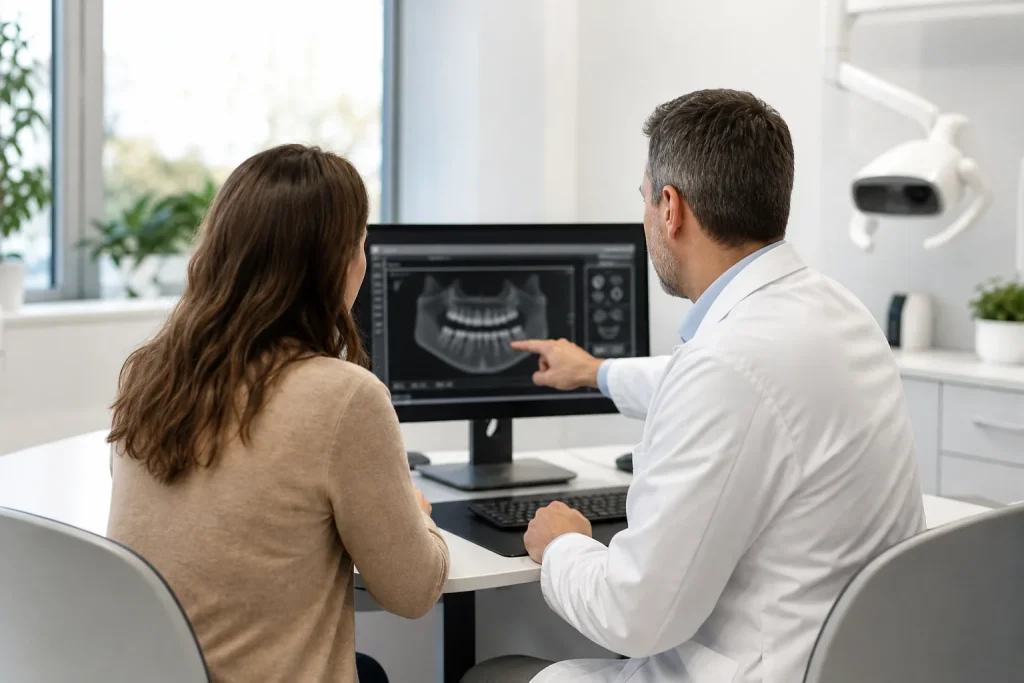
Why consider volunteering for an implant study
Volunteering can be a way to access care you might not otherwise afford.
You may receive a reduced fee or fully covered implant treatment as part of a study.
Some studies offer modest stipends or travel reimbursement to recognize your time.
You will also be contributing to medical knowledge that helps future patients and clinicians.
Participating gives you an inside look at clinical research and the chance to ask professionals detailed questions.
Where researchers recruit volunteers
Academic medical centers and university dental schools are the most reliable places to find studies.
Large dental research centers run multiple trials and often list recruitment notices on their websites.
Clinical trial registries and hospital research pages also list contact details and eligibility rules.
- University dental schools such as research programs at major universities often recruit volunteers for implant work.
- ClinicalTrials.gov and other registries list ongoing implant studies with inclusion criteria and study contacts.
- Specialized research centers and translational research units may offer trials that include stipends or reduced fees.
- Local dental clinics connected to universities sometimes post recruitment flyers for nearby residents.
Typical eligibility patterns
Most studies set simple rules so researchers can get consistent results.
Understanding common criteria helps you identify trials you might actually qualify for.
| Eligibility Factor | Typical Requirement | Why it matters |
|---|---|---|
| Age | Usually 18 or 21 and older | Adults are chosen because growth and bone changes are stable after maturity |
| General health | Good overall health and able to tolerate minor surgery | Health status affects healing and study safety |
| Dental condition | Specific conditions such as a missing tooth or peri-implantitis | Researchers target particular clinical problems to test treatments |
| Follow up | Willingness to attend multiple visits | Long term follow up ensures outcomes are tracked properly |
How to verify that a study is legitimate
Verification protects you from scams and ensures your rights are respected.
- Check that the study is listed on a recognized registry and that a contact person is named. Always confirm the contact information with the institution directly.
- Ask whether the study has IRB or ethics board approval. This approval is a key sign of oversight and safety.
- Request a copy of the consent form or at least the compensation details in writing. Compensation and risks should be clearly documented.
- Speak to the study coordinator and, if possible, the principal investigator for clarity about procedures and follow up.
How to contact and apply
A careful, polite approach improves your chances and helps you learn more about the study.
- Call or email the study coordinator listed in the recruitment notice and introduce yourself briefly.
- Prepare to describe your dental history and why you think you fit the study criteria.
- Ask about the exact stipend, travel reimbursement, and what is covered such as implant or crown costs. Get these details in writing before committing.
- Be ready to attend screening visits which may include exams, x rays, and health questionnaires.
Compensation and benefits you might see
Compensation varies widely by site, funding, and the work requested from participants.
Some trials focus on offering free or reduced cost treatment rather than cash payment.
| Study Site | Typical Stipend or Benefit | Notes |
|---|---|---|
| LSU School of Dentistry | Eligible participants receive an implant; crown may have a separate fee | An example where treatment is provided but parts may not be fully covered |
| UCL Eastman Dental Institute | Small amounts such as ten currency units per visit for travel | Travel reimbursements with treatment provided at no cost |
| NYU Translational Research Center | Up to five hundred or up to two hundred fifty depending on the trial | Cash compensation for time and participation is sometimes offered |
| Indiana University School of Dentistry | Payments for time and free exams or cleanings in many trials | A mix of cash and free ancillary care |
| University of Florida Center for Implant Dentistry | Reduced fee implant and crown in some older recruitment posts | May require a longer term follow up commitment |
Risks, consent, and what happens if you withdraw
Clinical studies involve medical procedures that come with risks and benefits.
- Read the consent form carefully and ask questions about possible complications and how they would be managed. You have the right to clear answers about safety.
- Understand how withdrawal works and whether you will still receive follow up care or compensation if you leave the study early.
- Confirm who is financially responsible if a complication arises and whether your regular dentist will be involved in care.
Practical tips to increase your chances of being accepted
A few small steps can make your application stand out and save you time.
- Be organized and bring previous dental records and x rays to the screening visit. Clear documentation speeds up the process.
- Be honest about your health and habits so the study team can assess risk accurately.
- If you are flexible with appointment times mention that to the coordinator.
- Ask about any pre screening steps you can complete before your first visit.
- Consider registering with multiple academic centers in your region to see more opportunities.
- Stay polite and punctual because teams appreciate reliable participants.
Real world examples to set expectations
Examples help you picture what participation might feel like and what you might get in return.
- At some universities volunteers received an implant while paying separately for the crown, which kept overall costs lower than private care.
- Other trials offered modest cash to cover travel and time while providing treatment free of charge.
- Longer clinical trials typically require several follow ups across years, so participants committed to a long term schedule.
What to expect during follow up visits
Follow up appointments are a normal part of implant studies and can be frequent especially in the first year.
Expect routine exams, x rays, photographs, and brief surveys about comfort and function.
Some visits are quick check ins while others involve minor clinical work related to the research.
Keeping appointments on schedule ensures the data is valid and helps you receive consistent care.
Common questions people ask
People often wonder how long a trial will take and whether participation will affect regular dental care.
The answers vary but most trials coordinate with your general dentist or explain how routine care will proceed.
- Will I be charged for anything? Many studies cover specific research related procedures, but some costs like a crown may be separate.
- Can I keep my regular dentist? Often yes, and the study team will communicate with them as needed.
- Is there free parking or travel help? Ask the coordinator because some trials include travel reimbursement.
Final checklist before you commit
Before agreeing to a trial, run down a simple checklist to make sure you are comfortable moving forward.
- Confirm the exact compensation and what is covered in writing.
- Verify IRB or ethics approval and the identity of the study team.
- Ask about the total number of visits and the expected timeline.
- Make a plan for emergencies and know who to call after hours.
- Think about how participation fits your schedule and financial needs.
Conclusion and where fits in
Volunteering for dental implant research can be a smart path to care, to modest compensation, and to helping future patients.
It is important to be cautious, to verify study legitimacy, and to understand all terms before you agree.
If you follow the steps in this guide you will be prepared to evaluate opportunities and to ask the right questions.