This guide walks you through choices, paperwork, and environmental responsibilities in a clear and friendly way.
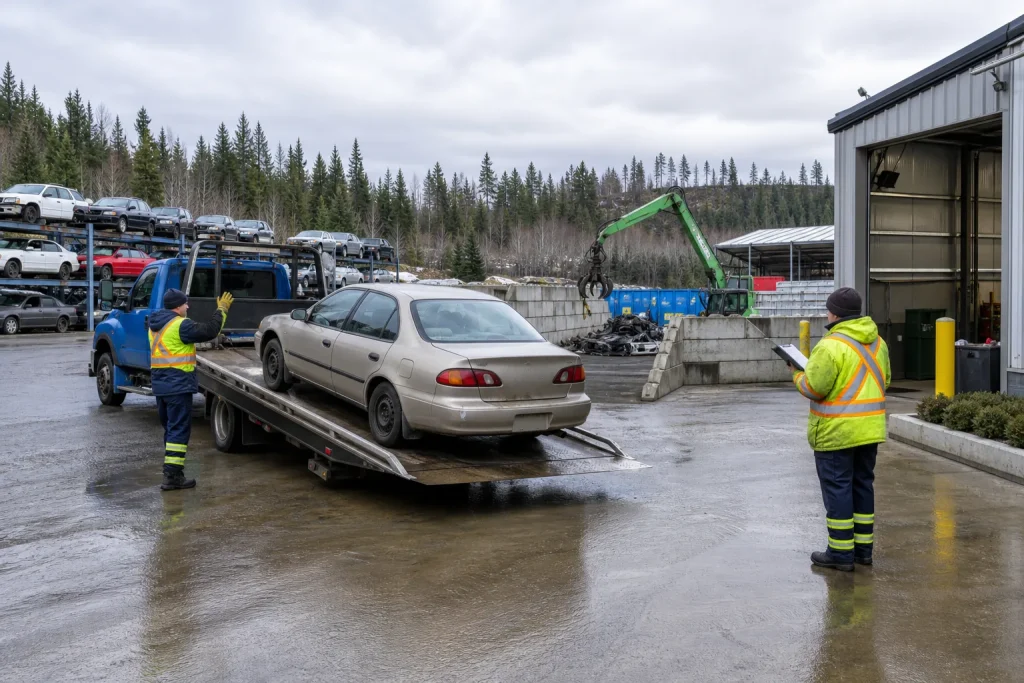
Why this matters
End-of-life vehicles carry both value and hazards.
Recovering usable parts and metals saves resources and reduces waste.
Improper disposal can leak oils, coolant, and other contaminants into soil and water.
Choosing the right path protects your wallet and the environment.
Key concepts at a glance
Here are a few quick definitions to orient you.
End-of-life vehicle means a car no longer fit for safe road use and usually headed for recycling or dismantling.
Cash for cars refers to buyers who offer pickup and immediate payment.
Depollution is the safe removal of fluids and hazardous materials before dismantling.
- Scrap value depends on metal weight, parts demand, and tow logistics.
- Reusable parts recovery is harvesting components like engines and electronics for resale.
- Hulk is the stripped shell that gets compressed or shredded.
Two main routes you will see
Most Canadian owners face two practical choices when a car reaches end of life.
You can sell to a cash-for-cars buyer for a quick pickup and immediate payment.
Or you can send the vehicle to a licensed recycler for depollution and materials recovery.
Which route fits depends on condition, time, and how much you care about environmental handling.
| Option | Typical benefits | Typical downsides | Best for |
|---|---|---|---|
| Cash for cars | Fast pickup and immediate payment | May pay less than private sale for salvageable cars | Junk, non-running, or urgent sales |
| Licensed recycler | Proper depollution and parts recovery | May require more paperwork and take longer | Vehicles that need environmental handling and recycling |
| Private sale or trade-in | Higher potential price for repairable vehicles | Slower and more effort | Running vehicles with market value |
Step by step: Prepare before you call a buyer
Preparation makes the sale faster and avoids surprises at pickup.
Gather your vehicle registration and proof of ownership before you contact anyone.
Make sure your ID is ready in case the buyer needs to verify your identity.
Remove toll transponders and any accessories that might still be in the car.
- Decide whether to sell, donate, or recycle by comparing offers and repair costs.
- Locate ownership documents because most buyers require proof before towing the car.
- Clear personal items from glove box, trunk, and under seats to avoid losing anything important.
- Take photos and note the VIN to speed up online quote requests.
How to get and compare quotes
Getting multiple offers is a simple way to be sure you are getting fair value.
Some buyers give instant online estimates while others need photos or an inspection.
Include the VIN and condition details when you ask for a quote to get the most accurate offer.
- Ask at least three buyers or recyclers to compare tow, payment method, and final offer.
- Confirm whether offers are firm or subject to inspection so you are not surprised at pickup.
- Watch for signs of a reputable buyer like provincial licensing, clear payment terms, and written receipts.
Towing, payment and paperwork explained
Payment and towing terms vary widely between services.
Some buyers offer free towing and cash at pickup while others issue an e-transfer or cheque after inspection.
Confirm who cancels registration and how ownership is transferred so you are not liable later.
| Item | What to check | Typical options |
|---|---|---|
| Towing | Is towing free and same day? | Free tow, scheduled tow, or owner-arranged tow |
| Payment | When and how will you be paid? | Cash at pickup, e-transfer, cheque after inspection |
| Paperwork | Who handles ownership transfer and registration cancellation? | Seller signs bill of sale, buyer files transfer, provincial forms |
Verify licensing and environmental handling
Environmental rules differ by province but the principle is the same.
Licensed recyclers follow depollution procedures to remove fluids, refrigerants, and batteries safely.
Ask whether the recycler follows a national or provincial code and whether they provide receipts for depollution.
What happens after pickup
A responsible recycler uses a standard flow to process vehicles.
Intake and documentation come first so the recycler knows what materials are present.
Depollution removes oil, coolant, and refrigerant to protect soil and water.
Parts that still have value are harvested and catalogued for resale.
The remaining hulk is crushed, shredded, and separated into ferrous and nonferrous streams.
- Intake and paperwork to log vehicle details and ownership transfer.
- Depollution to remove hazardous fluids and materials.
- Parts harvesting to recover usable components.
- Shredding and metal separation for final recycling.
Electric vehicle end of life
Electric vehicles add complexity because of the battery pack.
Batteries require specialist removal, transport, and processing to prevent fires and pollution.
Do not attempt to remove or handle an EV battery yourself unless you are trained and equipped.
- Identify professional EV battery handlers because they know packaging and transport rules.
- Ask whether the buyer uses certified battery processors to ensure proper recycling or repurposing.
- Confirm whether there are incentives or programs in your province for EV battery recycling.
What drives the price
Scrap offers are not random; they reflect clear market drivers.
A running vehicle usually fetches more than a non-running one because towing costs are lower.
Catalytic converters, heavy metals, and high-demand parts raise value.
Distance and towability matter because long or complex pickups reduce the net offer.
- Vehicle condition and whether it runs
- Parts demand for that make and model
- Weight and metal content
- Value of high-demand components like the catalytic converter
Common mistakes sellers make
People often leave personal items in the car and then regret it after pickup.
Always remove plates, toll transponders, and personal belongings before the buyer arrives.
Another common error is accepting an offer without confirming payment timing and method.
Verify the buyer is licensed and asks about depollution, especially for older vehicles.
Pros and cons summary
Summarizing choices helps you pick what matters most: speed, price, or environmental responsibility.
If you need cash fast a reputable cash-for-cars buyer may be best.
If you care about proper environmental handling and parts recovery a licensed recycler is better.
For repairable cars a private sale can often bring the highest return but it takes more time.
| Route | Pros | Cons | Recommended when |
|---|---|---|---|
| Cash for cars | Speed and simplicity | Potentially lower price for repairable cars | Vehicle is non-running or owner wants immediate payment |
| Licensed recycler | Environmental safeguards and parts recovery | More paperwork and sometimes lower immediate cash | Vehicle must be depolluted and recycled responsibly |
| Private sale | Highest price possible | Time consuming and requires safe test drives | Vehicle is in good condition and marketable |
Real world tips and examples
Imagine a small sedan that will not start and has been sitting for months.
A cash-for-cars buyer might offer a quick pickup and a few hundred dollars which removes the headache.
If the same car had a functioning engine and popular parts you could make more selling the engine or listing it privately.
Ask yourself whether you value speed or maximum return when you get offers.
Resources to check and final checklist
Before you sign anything have a short checklist to avoid common traps.
Confirm ownership documents, remove personal items, get multiple quotes, and check environmental handling.
Keep copies of all paperwork and receipts in case questions arise later.
- Proof of ownership and ID
- Removed license plates and toll transponders
- Written offer or quote details
- Receipt or bill of sale at pickup
- Notes on how registration was cancelled or transferred
Conclusion and next steps
Choosing the right path for an end-of-life vehicle is a balance between speed, money, and environmental care.
Take simple steps first: remove personal items, gather ownership papers, and compare multiple offers.
If you want the fastest option choose a reputable cash-for-cars buyer and confirm towing and payment terms in writing.
If you want environmental responsibility choose a licensed recycler that documents depollution and parts recovery.